
Authors often express how elated they are when they finally place their book with a publisher. It is, after all, a significant challenge to achieve that with a traditional mainstream publisher, especially if the work is non-fiction involving years of research.
But the placing of a book should also be seen as a planting because it’s hard not to appreciate how the original spadework, including my latest Oceans of Fate: Peace and Peril Aboard the Steamship Empress of Asia, encourages new growth and contributions from readers. And the folks I value most are those who’ve read or are reading the book and take time to reach out and sow seeds that help build upon the written pages.
Recent e-mail correspondence with retired teacher Eileen Rennie of the historic port city of Liverpool, U.K., is a fine example. She had first contacted the Empress of Asia research website hosted by Nelson Oliver, and Nelson then passed her message onto me. I wrote to Eileen and she generously provided information, including several photos relating to her grandfather, Charles Cusack, and her father, Peter Christian. Amazingly, both men served on the Empress of Asia at the same time and were taken prisoner after the ship was bombed and destroyed off Singapore in early February 1942.
Research had shown that both men signed Articles of Agreement to join the ship at Liverpool on October 31, 1941. Unfortunately, additional information was not available until now. And should the opportunity arise to release a 2nd Edition of Oceans of Fate, I will endeavour to fit these lads into the narrative owing to the collection of circumstances both were dealt before and after the war. But for now, the following will have to do.
A Relative Experience
“My grandad and father spoke very little of the awful time they had as POWs in Singapore,” explained Eileen Rennie. “Grandad was Chief Tourist Steward on the Asia and was almost forty-four years old when he was captured by the Japanese.”
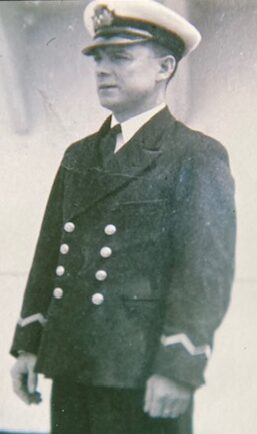
“Grandad did tell us he was once hit on the head with the butt of a rifle for failing to bow to a Japanese soldier. He had listed about six stones (eighty-four pounds or thirty-eight kilograms) in weight while at Changi (prison camp), Singapore, and believed he would have never made it home without Dad’s help. It certainly took him a while to get used to wearing shoes again after his release (in 1945). He came back to his home in Upper Bute Street, Everton, Liverpool, to his wife, Martha, and four children, one of whom was Dad’s fiancee who went by the name Matty. Grandad’s neighbours put up a banner across the narrow street stating Welcome Home Charlie POW. One elderly lady, on seeing the banner, asked ‘Who is Charlie Pow?’ And that became Grandad’s nickname ever afterwards.”
Born at Liverpool on February 23, 1898, Charlie Cusack enlisted in April 1915 at age seventeen, serving as a private in the 9th Battalion, Liverpool Regiment. He had fought through the horrors of the attritional trench warfare on the Somme and across the morass of Passchendaele. None of that, however, kept him from service in the Second World War as Chief Steward, Third Class, on the coal-burning Empress of Asia, refitted as a troopship. He was just days away from marking his forty-fourth birthday when the Asia was bombed and he, along with many other crew members, including Eileen’s father, Peter Christian, were taken prisoner.
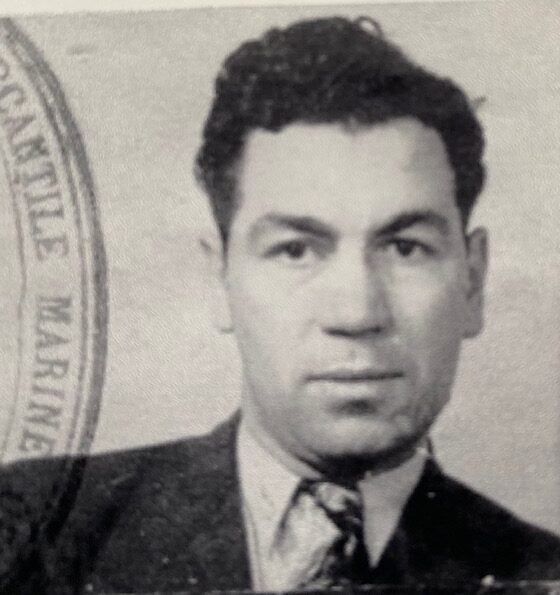
Peter Christian was born in 1915 in St. Martin Street, just off Scotland Road, Liverpool. He was the youngest of four children and loved to read, perhaps as a way of escape. Peter’s father, William Christian, toiled on the docks–an intense and dangerous slog with little pay.
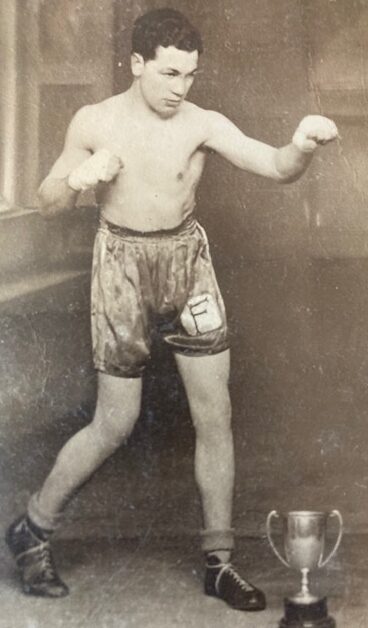
By the time Peter turned thirteen, his mother, Rosanna, and father were dead. Orphaned, the lad eventually moved in with his married sister who became his next-of-kin. “Dad grew up a shy young man, but took up boxing…and this boosted his confidence,” explained Eileen.
“He became a champion amateur boxer and his love of the ‘noble art’ lasted all his life. After he left school he became a lorry driver before deciding to join the merchant navy. But before going to sea he had met and fallen in love with Matty, the eldest daughter of Charles and Martha Cusack, and the two became engaged,” added Eileen. “His first ship was the Canadian Pacific’s Duchess of Atholl and after that signed onto the Empress of Asia in 1941. He was twenty-six–still engaged to Matty–when the Asia was attacked. No one had any information about what had happened to him nor to my grandad for several months after the ship was destroyed.”
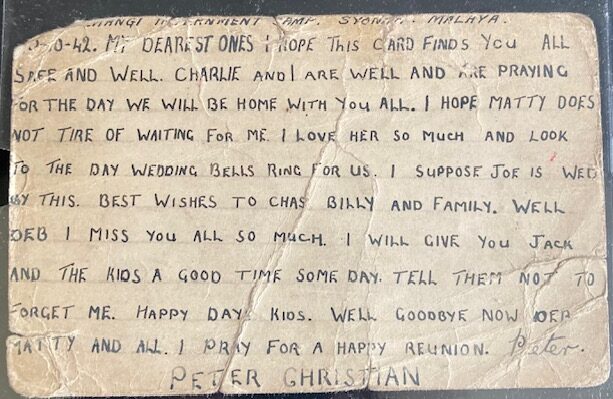
News did arrive in the form of a poignant letter from Peter while he was a POW at Changi. “I hope Matty does not tire of waiting for me,” he wrote. “I love her so much and look to the day wedding bells ring for us.” He ended his letter with: “I pray for a happy reunion.”
On October 15, 1944, Charles Cusack managed to send a message to his wife, Martha:
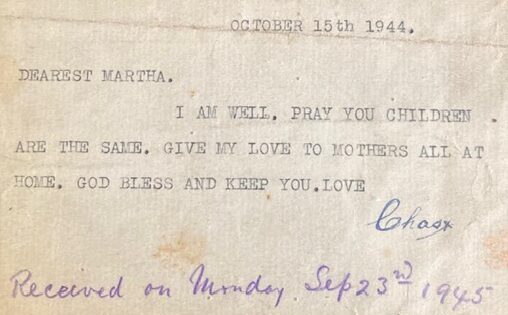
The “S” in the word MOTHERS was likely an error by the individual who typed Cusack’s message. The line should read: GIVE MY LOVE TO MOTHER & ALL AT HOME. Sadly, the message didn’t arrive until September 23, 1945–nearly a year after it was written, and after the Japanese surrender.
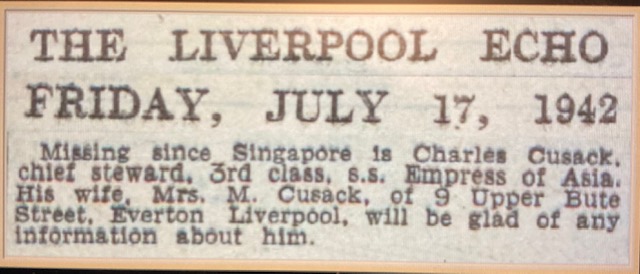
Meanwhile, two short newspaper articles appeared locally. The first published in the Liverpool Echo, July 17, 1942–more than five months after the Empress of Asia was bombed–stating only that Charles Cusack was missing.
The second article appeared in the Liverpool Evening Express, May 1943, stating Peter Christian, who had been reported as missing, was a prisoner of war.
“Dad arrived back in Liverpool in the autumn of 1945 and the following March married Mum with all the family present,” noted Eileen. “The war was over and so it was a particularly happy occasion. Mum’s two brothers and Dad’s brother had survived being torpedoed.”
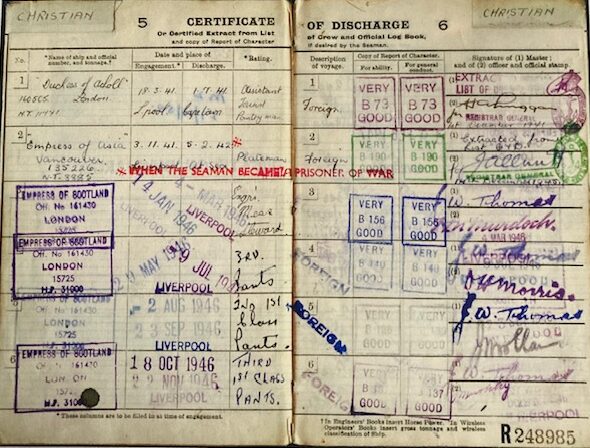
Peter Christian continued working for the CPR with his career progressing from Plateman during the war to Chief Steward and Purser in 1970. Eileen notes that during the 1960s her father became “the first seafaring union convenor” and that a headline in the Daily Mail newspaper announced how “Mr. Christian aims to stop mutinies.” His interest in settling disputes may have stemmed from his time on the Asia, and how the ship had experienced rebellious behaviour in the stokehold before and during the final voyage to Singapore. In Oceans of Fate I attribute the behaviour partly to a lack of onboard discipline, leadership, and a severely under-manned crew on a ship still relying on coal.
In the fall of 1970, while aboard another merchant ship, Peter Christian suffered a stroke and was medically evacuated to a New Orleans’ hospital. He was fifty-four, a year older than the age of his father when he died. Peter’s chance of survival was, noted his daughter, 50/50. “Mum and I went out there to be with him and the doctor told us Dad had said something he didn’t understand–about being held by the Japanese. So, in Dad’s desperate state he thought he was still back at Changi prison.”
Eileen’s father made it home to Liverpool and carried on for another twenty years. “It just shows that Changi never really was left behind.”
Charles Cusack, meanwhile, faced a horrific irony at the age of eighty-two. He had been through much, but in 1980, while living the life of a pensioner, he nearly had his throat slit by two thugs who broke into his home, intent on robbing him. “I shall never forget the venom in their voices as they stood over me with that sword, trying to make me hand over money I did not have,” he told local newspaper reporter Andrew Louden. His two attackers were arrested, charged, and sentenced to prison.
“Grandad never really recovered after that trauma,” added Eileen. “He came to live with us afterwards and he died in February 1982.” He was eighty-four.
Peter Christian died peacefully in his own bed on May 19, 1992, at age seventy-six. “He was a quiet, gentle man with a good sense of humour and great strength of character, whose family and home meant everything to him. He travelled far and witnessed man’s inhumanity to man, but it did not affect his kindness and goodness,” noted Eileen.
Even with that family connection, Eileen admits that while growing up she never realized how difficult and dangerous it was for merchant seaman during the war. “I just thought they were not really involved because they were not in the army and were just carrying on doing their job, going to sea. How wrong could I be?”
And so this is why non-fiction history books matter, and why each book is a planting.